


What is Sleeping Bag
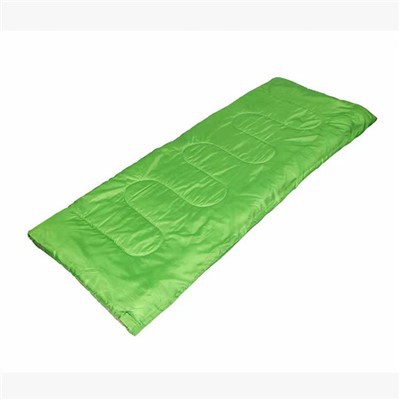
A sleeping bag is an insulated covering for a person, essentially a lightweight quilt that can be closed with a zipper or similar means to form a tube, which functions as lightweight, portable bedding in situations where a person is sleeping outdoors (e.g. when camping, hiking, hill walking or climbing). It is also commonly used indoors for people who do not have beds or at sleepovers. Its primary purpose is to provide warmth and thermal insulation through its synthetic or down insulation.
Benefits of Sleeping Bag
It gives you a good night's sleep
Tent campers will technically be sleeping on the ground. A sleeping bag can still give your back a bit of cushion. Add a sleeping pad if that is not enough for you. It's a far cry from your bed at home, but it is enough to put you to sleep. An air bed provides more cushion than sleeping bags but you have to be careful in choosing one.
It is good for emergency use
Adventure begins as soon as you step out of your doorstep. It's always better to be prepared. Packing a sleeping bag will help you survive any unexpected incident. Sleeping bags can also serve as your emergency blanket. An air bed is more comfortable but it may not be enough to keep you warm when it gets colder than expected.
It is compact
The weight of the camping gear should always be considered when packing for a trip. For those traveling by car or camper vans, bringing an air bed wouldn't be too much of a challenge. Bushwalkers, however, would be better off with a sleeping bag as it is lighter and more compact. There are even wearing sleeping bags that can be used as a jacket, giving you more space in your backpack and an additional body warmer. Keep in mind that not all sleeping bags weigh the same. Its weight depends on its materials and shape.
It is easy to set up
An air bed takes at least four minutes to fully inflate, whilst sleeping bags are easier to set up. All you have to do is pull up your sleeping bag from your bag and lay it on the ground. But before that, decide how you want to place the sleeping bag in the tent. You can set it up facing the tent flap or vestibule or have it parallel to the entrance. Also make sure that it doesn't touch the edges of the tent as the moisture might dampen the sleeping bag.

Why Choose Us
Rich experience
A leading enterprise in garment and bag manufacturing with more than 20 years of history, we have 18000 square meters of self-built factory and about 100 workers. Therefore, we can better control the cost, quality and delivery time.
Advanced production equipment
All kinds of sewing machines, such as high head sewing machine, date beating machine, etc. The main products include outdoor sports bags, laptop bags, school bags, canvas bags, kraft paper bags, cooler bags, etc.
Quality control
Inspect raw materials before cutting. Check all trimmings. Online quality control of semi-finished products every day. 100% inspection of finished products before shipment.
Production market
We have established long-term cooperative relationships with many private brands, large retailers, wholesalers for more than 20 years. Our main markets are Europe, the United States, Asia, etc.

The temperature rating of a sleeping bag indicates the lowest temperature at which the average sleeper should remain comfortable. Sleeping bags are often rated as “summer,“ “3-season,“ or “winter“:Summer: Rated for temperatures of 35°F (2°C) and higher.3-season: Suitable for temperatures of 10°F to 35°F (-12°C to 2°C), good for spring, summer, and fall in most climates.Winter: For temperatures of 10°F (-12°C) and below, suitable for cold weather camping. Everyone sleeps a bit differently. Some people sleep hot, and others sleep cold. If you tend to get cold easily, consider a sleeping bag rated for colder temperatures than the minimum you anticipate.
Additional Sleeping Bag Features
Sleeping bag shells: The outer fabric, which is made of either a durable polyester or nylon, has a durable water repellent (DWR) finish to protect the insulation inside the shell from dampness. Inside the bag, you'll find materials with a soft, warm texture.
Sleeping bag hood: A snug-fitting hood can make a bag much warmer, so you're more likely to find hoods on bags with lower temperature ratings.
Zipper features: Getting a bag with more than one zipper slider makes it easy to adjust ventilation. In addition, some bags prevent zipper snagging by shielding the zipper with a guard along its full length; others tackle the issue with a cover of the zipper itself.
Stash pocket: A few bags offer a handy zippered stash spot for things like a watch or lip balm.
Sleeping Bag Accessories
Stuff sack
A sleeping bag stored in a stuff sack will take up less space when you stow it in your vehicle.
Storage sack
Leaving a bag permanently smooshed inside its stuff sack is hard on the insulation, so a lot of bags also come with a large mesh or cotton storage sack for long-term storage.
Sleeping bag liner
Slipping a soft sleeping bag liner inside your bag helps keep it clean and adds extra warmth when needed. Camping in hot weather? Skip the bag and just sleep in the liner.
Mummy sleeping bags
The mummy style is designed to optimise insulation by cocooning your body while dispensing with unneeded weight and bulk. Often equipped with a hood, the tapered, streamlined fit will maximise heat retention in colder climes or when camping high up. The snug fit requires less fabric and thus they have an excellent weight-to-warmth ratio. Some backpackers prefer a looser fit. Mummy bags can be more expensive, too.
Square sleeping bags
Square types of sleeping bag are similar to the mummy style but feature no tapering. This means they are less efficient at retaining warmth and also utilise more fabric which you’ll have to carry in your pack. However, they provide more wriggle room for those who prefer space to stretch out after a day on the hills. Many feature full-length zips and so can be folded out and used as a quilt on summer nights. They are a good, more affordable option for warm-weather backpackers.
Semi-rectangular sleeping bags
These are a halfway house between the mummy and square sleeping bags. Semi-rectangular sleeping bags boast a tapered top, offering insulation from your shoulders down and trapping warmth around the body. All the while, the squared-off foot of the bag gives more space for your legs and feet to move. Like square sleeping bags, they often feature full or half-length zips.
Double sleeping bags
Double sleeping bags are for couples who want to sleep together while camping. Roomy enough to comfortably fit two adults, double bags are typically wider versions of a rectangular bag, but it’s possible to find double versions of barrel and mummy bags as well.
Kid-sized sleeping bags
Kid-sized sleeping bags are smaller, shorter and generally more affordable versions of adult bags. You can find them in all the shapes of adult bags, including rectangular, semi-rectangular and mummy.
Sleeping Bag Length
For men
Men’s sleeping bags tend to come in tall and regular lengths, although some brands offer short sizes. Tall sleeping bags are designed for people between six feet and six feet six inches tall, while regular bags fit people between five feet six inches and six feet tall. Short sleeping bags typically fit individuals up to five feet six inches tall.
For women
Women’s bags are generally shorter than men’s, and they most commonly come in tall and regular models. Tall women’s sleeping bags accommodate women up to five feet 10 inches tall, while regular bags fit women up to five feet four inches tall. Women taller than five feet 10 inches can find options with unisex bags, while petite women might find children’s sleeping bags that fit their measurements.
What to Consider When Choosing Sleeping Bag

Temperature ratings
Sleeping bags have different temperature ratings. A sleeping bag with 20 ° C or less is perfect for summer campers, whilst a goose down bag with a rating of at least -20 °C is more appropriate for winter camping.

Zippers
Some sleeping bags come with multiple zippers placed strategically around the bag, allowing you to zip and unzip as needed to adjust your ventilation. Many models also have a design that minimizes snagging by encasing the zipper or the chain in a snag-proof guard.

Insulation material
There are two types of insulation: synthetic and down. Each has its own benefits. Synthetic sleeping bags are versatile and can still store heat even when damp. A goose down, on the other hand, is lighter in weight and performs better in cold, dry weather. Some campers would suggest bringing a synthetic bag.

Shape
Sleeping bags have four different shapes: rectangular, semi-rectangular, mummy, double bags, and kid-size. Rectangular sleeping bags have enough space for your legs and arms and may even be used as a comforter. Modified mummy is another term used for semi-rectangular sleeping bags and offer both warmth and ample room for your body.

Most sleeping bags are made with DWR-treated nylon ripstop shell and liner fabrics, which are lightweight, very comfortable, and allow for sleeping bags' fillings to loft especially well. The more expensive your sleeping bag is, the lighter and thinner this nylon fabric will be and the specification you will want to look for to quantify this is denier. The weight difference per square yard between a 10D and a 40D nylon fabric (the 'D' standing for denier) is significant, and ultralight sleeping bags are often so thin that you can see right through them to the down feathers inside.
Sleeping bags for recreational camping will sometimes use more "old-school" fabrics than nylon (like cotton and flannel), and this can be particularly nice in cooler temperatures. For camping in warm or humid weather, nylon will remain cooler and dry faster, though.
How To Use A Sleeping Bag
Temperature adaptation: Before settling in for the night, adjust the temperature inside your tent if possible. This might mean opening vents to reduce condensation or closing them to trap heat. Your sleeping bag is designed to function as part of a system, with the tent environment playing a crucial role.
Layering wisely: While it’s tempting to pile on the clothes during colder nights, too many layers can actually hinder the sleeping bag’s ability to trap heat. Opt for a breathable base layer to wick away moisture and let the bag’s insulation do its job. Remember, the goal is to trap warm air close to your body, and excessive clothing can prevent this.
Utilizing sleeping bag features: Many sleeping bags come with additional features like draft collars, cinchable hoods, and zipper baffles. These are designed to combat heat loss in specific ways. For example, a draft collar can prevent warm air from escaping when you move during the night, while a cinchable hood can keep your head warm without restricting breathing.
Components of Sleeping Bag
Baffles: The internal pockets of insulation that prevent the insulation (in this case, usually down), from shifting, clumping, and developing cold spots. Sewn (or stitch) through and box are examples of baffle techniques.
Layers: Construction method using two offset layers of synthetic insulation. The top layer is sewn to the shell and the bottom layer to the lining.
Shingles: Construction method using overlapping sheets or pieces of insulation stitched to the bag's shell and lining. Typically used with synthetic insulation.
Shell: The exterior shell keeps the insulation close to your body, and provides a little insulation on its own. Some shells are made of water-resistant materials and some with waterproof-breathable membranes.
Lining: Usually made of a softer material than the external shell, the interior lining is designed to feel soft and wick moisture away.
Hood: An insulated hood prevents heat loss from your head, and keeps warm air from escaping the rest of the bag.
Hood, chest, or stash pockets: A watch pocket in the hood stows your watch close to your ear for alpine starts. A chest pocket for your iPod will let you fall asleep to your favorite tunes.
Zippers: Come in different lengths. A full-length zipper can help regulate your temperature if you start to sweat, a half-length zipper may save some weight, and no zipper may be ideal if you're an ultralighter.
Zipper should be anti-snag. Many bags give you a choice between a left- or right-side zipper. A right- and a left-zippered bag with compatible zippers may be zipped together.
How to Hand Wash a Sleeping Bag
Fill the tub with cool or warm water and add the appropriate cleaner for your down or synthetic bag. Avoid using too much soap; if it gets too sudsy, it's harder to rinse out.
Lay the bag in the water and gently work in the soap throughout the entire bag. Rub together the most heavily soiled areas. Allow it to soak for up to one hour.
Drain the tub and press out any remaining water. Fill the tub with cool or warm water to rinse, work the soap out gently, let the bag sit for 15 minutes and drain. Press out any remaining water. Repeat the rinse process until all the soap is out.
Gently squeeze out as much water as you can from the bag. Then, work your hands underneath and gather it all up in a ball in your arms to carry it to a dryer. This helps avoid straining and ripping the seams.
If you have a large dryer at home, use that for drying the bag. If your dryer is so small that the bag stays balled up, you'll need to transport your wet bag to the laundromat.
If you choose not to use a dryer for your bag, lay it flat on a clean surface outside (such as grass or a beach towel) in the sun or partial shade. You may need to manually break up clumps of insulation as your bag dries.
Most sleeping bags can be machine washed, as long as a front-loading washer (or top-loading machine without an agitator) is used. Keep in mind that some home front-loaders tend to be small and energy efficient, and may not give your bag enough room to tumble and clean thoroughly.)
Wash on the gentle cycle in warm (or cold) water with an appropriate soap. Again, use as little as possible to avoid over-sudsing.
Try adding some other damp articles that need washing, such as a towel or a couple of T-shirts, to help balance the spin of the machine.
To make sure all the soap residue is gone, rinse at least twice. Or run it a second time through a complete (soap-free) wash-and-rinse cycle.
Set the dryer on low heat. Machine heat varies, so check often. If it's too hot, the fabric or even the synthetic fill can melt.
When a down bag is nearly dry, add two or three clean tennis balls (or a lightweight pair of clean sneakers) to the dryer. This will help break up any clumps of down as it spins and will help restore the loft.
Make sure your bag is thoroughly dry before placing it in its storage bag. You can leave it out all night on a bed or hang it up by toe loops, just to be sure.
FAQ
Xiamen Goldenway Enterprises Co., Ltd. is one of the most professional sleeping bag manufacturers and suppliers in China. We warmly welcome you to buy high-grade sleeping bag at competitive price from our factory. We also accept custom orders.